How Long Does a Commercial Fit-Out Take in Singapore and Hong Kong?
Construction is often the shorter part. Most of the time goes on the brief, the design, the approvals and the decisions in between, and that is where a programme is won or lost.
For a typical office of 5,000 to 10,000 sq ft, allow five to eight months from appointing a designer to moving in. A small, straightforward space can take less; a large, technical or multi-floor project, or one in a building with demanding approvals, can take considerably more. Any firm that gives a firm duration before seeing the premises and the brief is estimating, and the useful question is what the estimate assumes.
The stages, and what each one depends on
| Stage | Typical duration | What decides it |
|---|---|---|
| Brief and site survey | 2 to 4 weeks | How clearly the business knows what the space must do, and the condition of the premises |
| Concept design | 3 to 6 weeks | The number of options explored and how quickly decisions are made |
| Design development and documentation | 4 to 8 weeks | The level of detail, the building services involved and the bespoke elements |
| Landlord and statutory approvals | 2 to 8 weeks | The building, the use, and whether statutory approvals are needed as well as the landlord's |
| Tender and contractor appointment | 3 to 5 weeks | The number of contractors pricing and the completeness of the documents |
| Construction | 8 to 14 weeks | Size, specification, long-lead items and the building's permitted working hours |
| Handover, defects and move-in | 2 to 4 weeks | The furniture, the IT and the business's own move |
The stages overlap on a well-run project. Approvals can be prepared while documentation is finished, and long-lead items can be ordered as soon as their design is fixed, before construction starts.
What sets the pace
Decisions. A programme assumes that each stage is signed off on time. A week spent choosing between two options is a week added to the end, and a change after documentation moves both the programme and the price.
The premises. A bare shell, a partly fitted unit and a previously occupied space start from different places. A survey of the existing space and its building services before the design is fixed avoids discoveries on site.
Long-lead items. Specialist joinery, imported furniture, lighting and some finishes can take longer to make and ship than the construction itself. They are ordered once their design is fixed, which is why late changes to them cost the most time.
Approvals. The landlord reviews the design, and some works need statutory approvals as well. Both run on the authority's timetable, not the project's, so they belong in the programme from the first week.
The lease. The rent-free fitting-out period agreed with the landlord is often the real deadline, so the programme is best set against it before the lease is signed, while the period can still be negotiated.
The route chosen. Design-and-build can usually start on site sooner, because there is no separate tender. The consultant route adds a tender stage but allows the design to be developed fully before the price is fixed. Our guide to choosing between a design consultant and design-and-build sets out the trade-off.
What changes in Singapore
Landlords' fitting-out rules set plan submissions, access and permitted working hours, and noisy works are often limited to evenings or weekends in occupied buildings. Some works need statutory approvals, which may include URA for a change of use, BCA for certain building works and SCDF for fire safety, and a restaurant or food outlet needs its licence from the Singapore Food Agency before it can open. Reinstatement obligations in the lease are best planned at the start, as they affect what is built and how.
What changes in Hong Kong
In major shopping centres, landlord requirements can influence the fit-out programme as much as the contractor's own schedule. Shopfront approvals, fire services, building services connections and restrictions on site access all need to be considered, and some works may require landlord-approved specialist contractors. A restaurant also needs its licence from the Food and Environmental Hygiene Department before it can trade. These apply whichever route is chosen. What matters is that responsibility for coordinating them is clearly established from the outset.
Two programmes from our own work
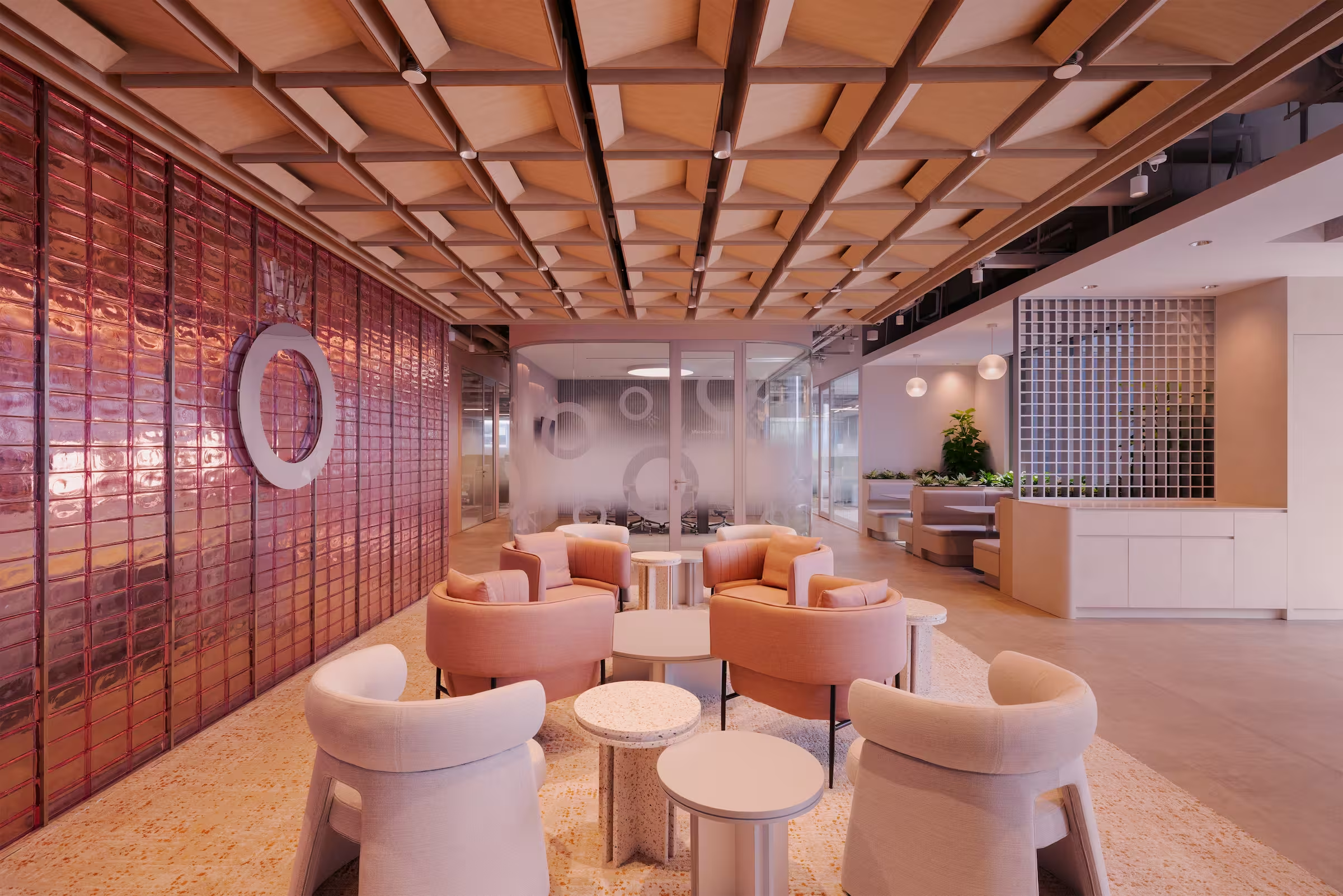
- Pandora's 8,600 sq ft Asia headquarters at Asia Square Tower 1, including a working retail store and a sculptural pink glass-brick screen, was an exceptional programme: it was designed and delivered in under five months from Studio X's appointment, faster than the usual range. Studio X took it from concept to completion, as design lead within a design-and-build team.
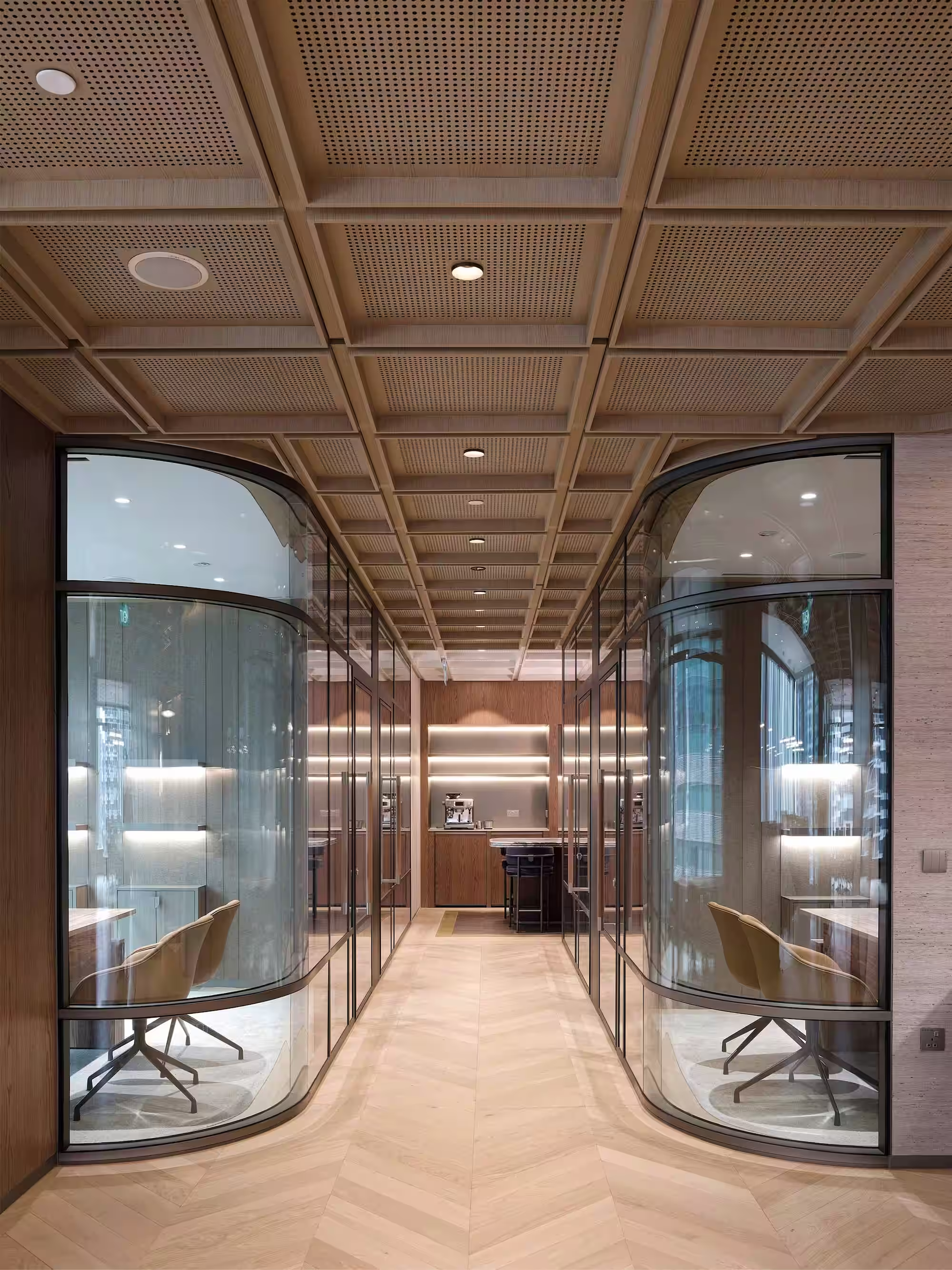
- At Eastern Pacific Shipping's 10,000 sq ft headquarters at Millenia Tower, Studio X's programme ran eight months from concept to completion.
How to shorten a programme without adding risk
- Fix the brief before design starts: headcount, growth, the rooms the business needs and the move-in date.
- Survey the premises and their building services before the design is fixed.
- Name one person who can make decisions, and agree how quickly they will be made.
- Prepare the approval submissions while the documents are being finished.
- Identify the long-lead items early and order them as soon as their design is settled.
- Bring a contractor's advice in once the concept is clear, so buildability questions are answered before tender.
Questions to ask about any programme
- What does this programme assume about approvals, and who is responsible for obtaining them?
- Which items have the longest lead times, and when must they be ordered?
- What working hours does the building allow, and are they reflected in the construction period?
- When must each design decision be made for the move-in date to hold?
- What happens to the programme if the design changes after documentation?
How Studio X works
Studio X is an independent, design-led practice in Hong Kong and Singapore. We typically work directly for clients, and can also undertake selected design-and-build projects with construction partners. We work through a defined nine-stage process from pre-concept to post-completion review, and a realistic programme is set once the brief and the move-in date are known.