These are 10 key components of a great retail store
Ten design and operational elements that consistently separate high-performing retail stores from average ones, from customer journey to spatial hierarchy.


What makes a great retail store?
Here at Studio X we go through a highly involved and all-encompassing process of understanding the business of each and every one of our clients. That, for us, is what underpins any great retail concept. But whilst every store has its own unique set of customers, business criteria, brand pillars, operational requirements and commercial goals, there are still some fundamental and foundational building blocks that should be observed in order to create a truly compelling retail store.
Make your store a font of knowledge
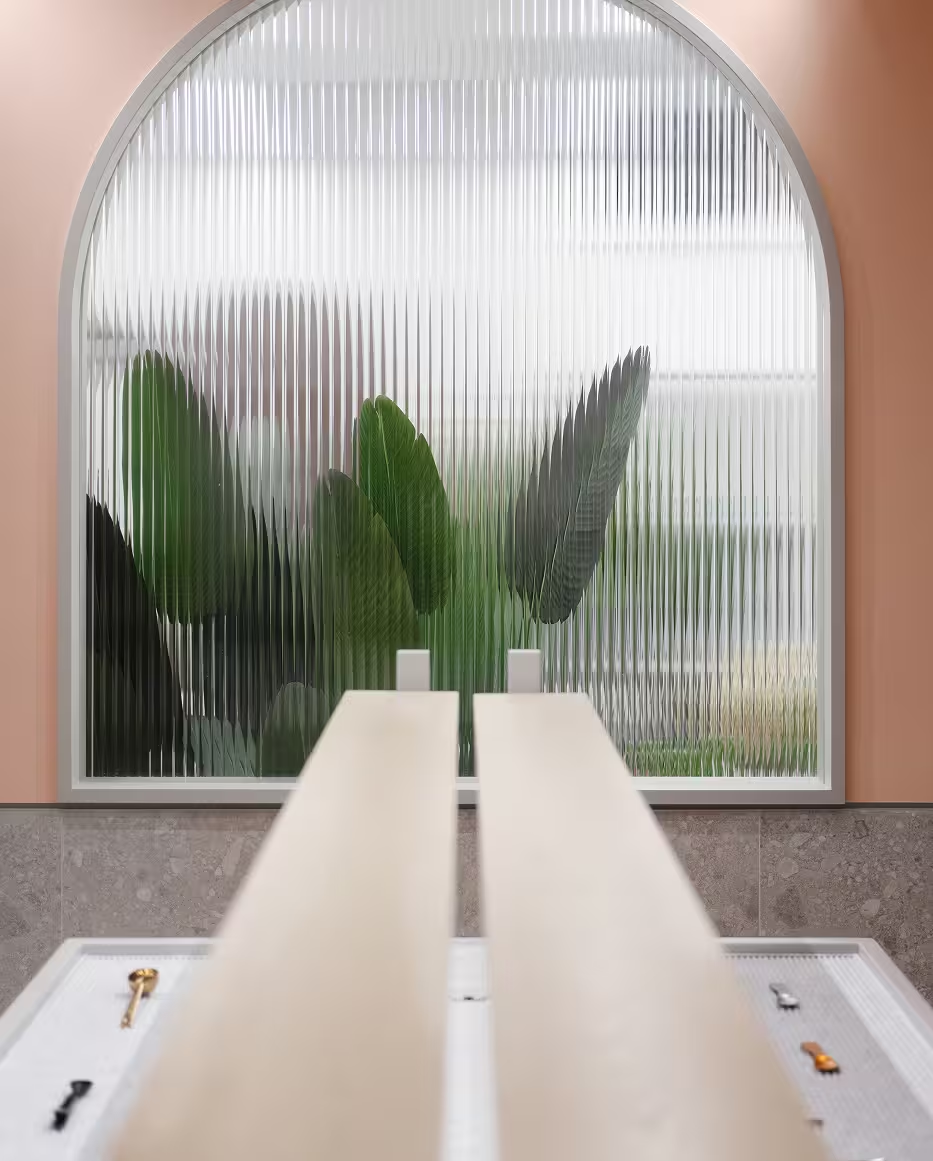
In the age of the non-sale driven brand experience, your store should seek to educate more than ever before, and do so in an inspirational way. Leading Chinese medicine firm Vitagreen wanted to vertically integrate their revolutionary medicinal Teapod system into a retail network of experience centres, so they came to us to help create a future retail store concept and give them the tools to roll it out across a 100-store network. We developed a retail strategy and created an award-winning flagship that brought product, brand and customer together.
Make it human
Make it sensory, tactile and interactive. A retail store design that is abundantly engaging, experienced not simply as a place to buy but as a playground for discovery, will enhance loyalty, improve dwell time and build emotional bonds that draw your audience into your brand story.
Clarify the customer pathway
Don't make your customers fight their way to a product or service. Ensure sightlines are clear and purposeful. Encourage customers to pick up products and get a feel for what they might buy. Make the entire process from arrival to purchase to departure a seamless, self-explanatory and intuitive one.
Aerate the store layout
In addition to creating a highly navigable store, aim to give customers the space to appreciate it. More breathing room around certain products adds to the feeling that the store has been thoughtfully curated. Where density is required, ensure it is done neatly and use hero products to showcase and abbreviate collections, avoiding overwhelming the audience.
Balance eCommerce with the physical store
We are moving beyond omni-channel into an era where bricks and mortar and eCommerce are more seamless and more in tandem than ever before. When designing a new store, always keep the objectives of your other channels front of mind to avoid cannibalising your own goals or creating a retail design solution that is in some way redundant in today's ever-changing commercial landscape.
Develop a striking visual merchandising strategy
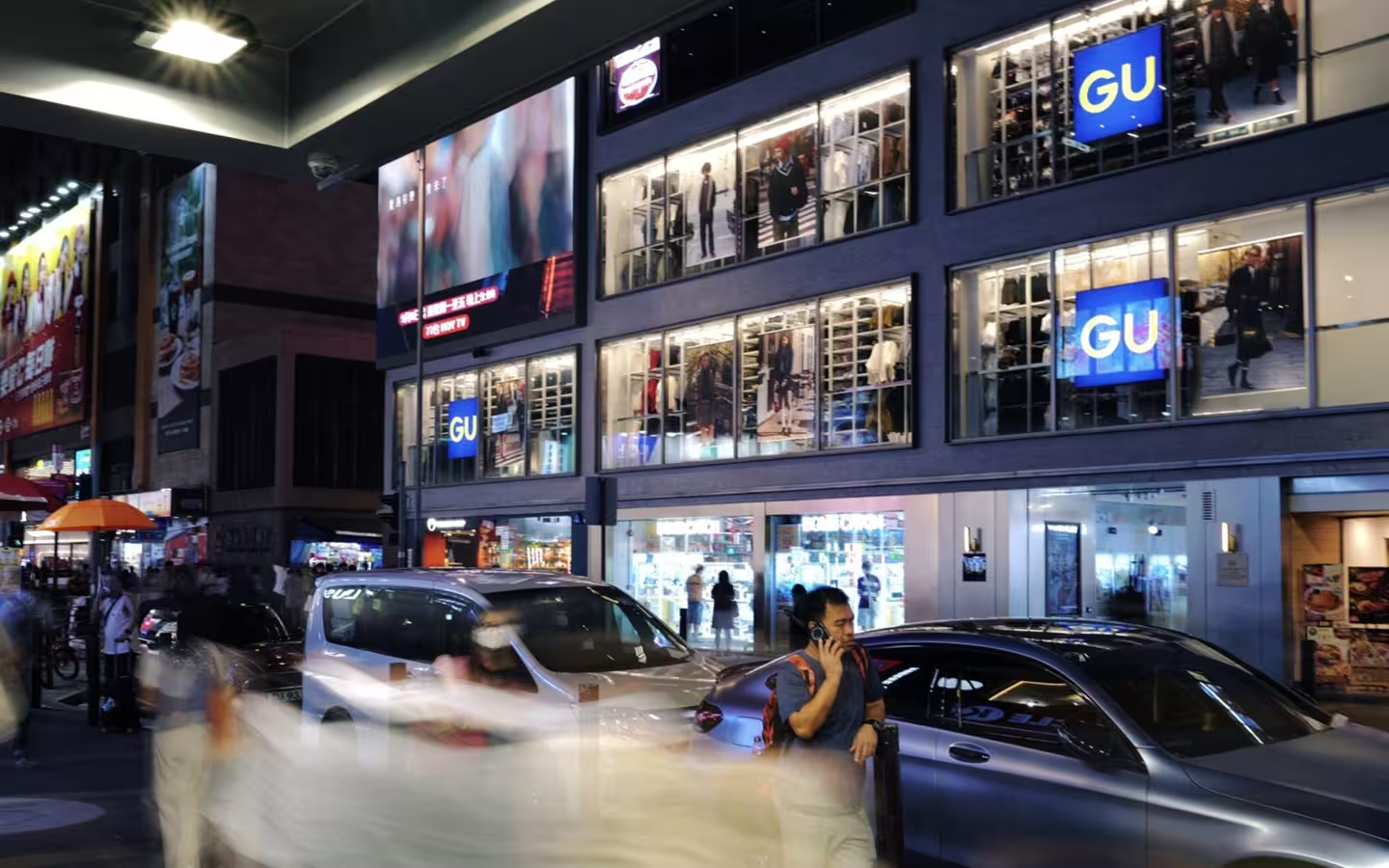
Start with your window displays. They are one of the most powerful marketing tools you have and provide an opportunity to showcase your best products and services. Your window display is like a movie trailer for your store: tell a story, create a focal point, make it bold, keep it simple, and update it regularly.
Use signs and environmental messaging sparingly
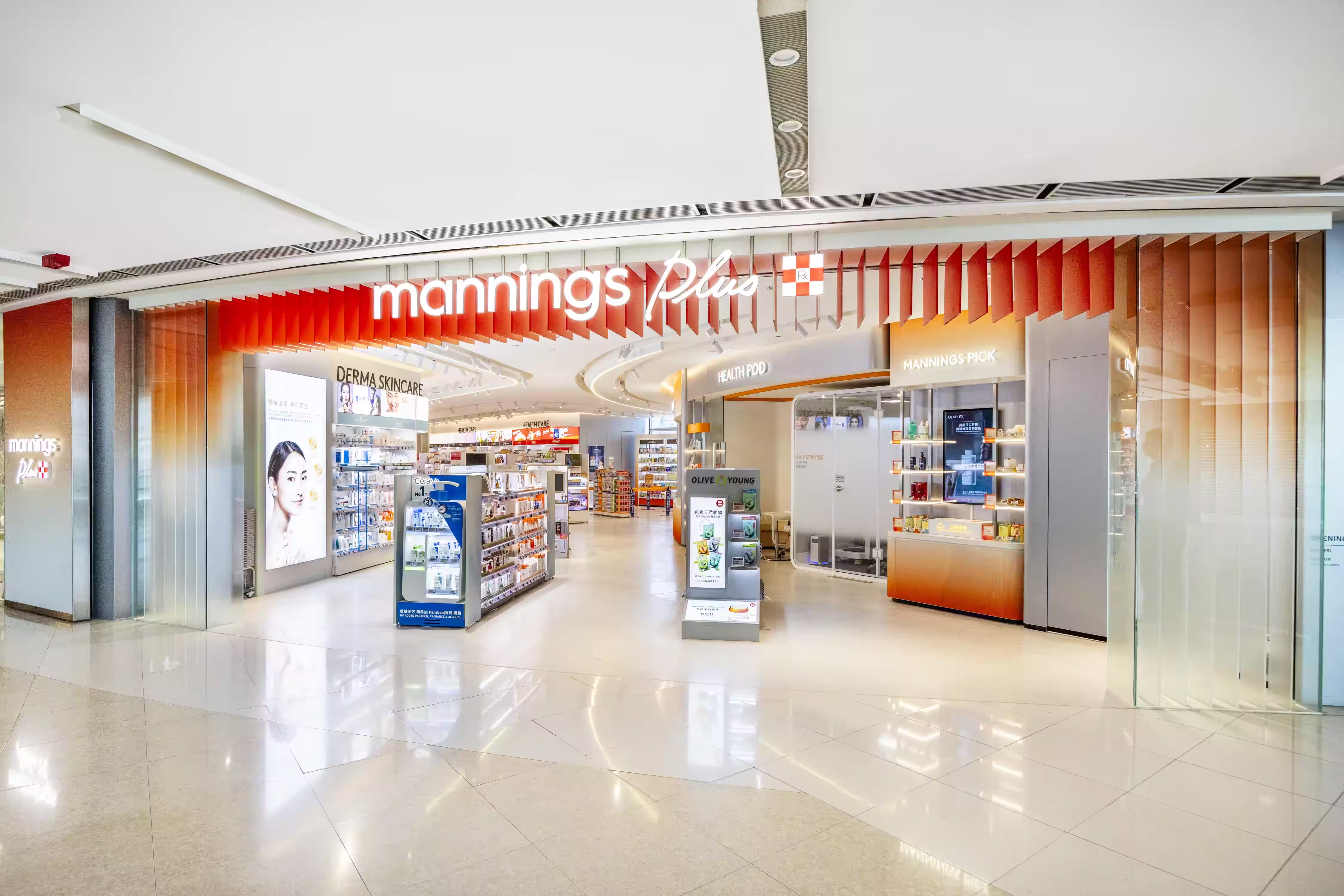
At the shopfront, consider the context of the street. In smaller stores, run prototype signage mockups to ensure scale suits the audience and environment. Use iconography and visual hierarchy to allow customers to simply glance and go. Consider environmental messaging to catch attention, educate or entertain, as we did when we designed the award-winning kitchen showroom and experience centre for Lee Yuen Housewares.
Put the customer in the driving seat
Great retail design allows customers to do what they want at their own pace, in a space that lets them explore on their own terms. Stores should be intuitive and have no barrier to entry or engagement. Ask yourself: can the store educate the customer about this product with little to no staff intervention?
Embrace technology, but don't become infatuated with it
3D scanners, robots and QR codes are wonderful innovations and, when used smartly, will more often than not enhance the store experience. But never use technology for the sake of it. Much of today's technology will be redundant in the not-too-distant future, and technology has a habit of looking very dated, very quickly.
Respect and leverage the power of social media
Every shopper carries with them the ability to shoot a film, photograph a moment or share an opinion instantly with millions of other shoppers. Retail store design always needs to consider this: how to create engaging, aesthetically pleasing elements that shoppers will want to capture and share. This is one of the most powerful forms of marketing available. It works around the clock, self-perpetuates, and it's free.
.avif)